

Hoof health - Expert knowledge
Transitioning to barefoot: What you need to know

Transitioning a horse from horseshoes to barefoot is a demanding task that requires careful preparation and expertise. A successful transition depends not only on the quality of the horn, but also on proper preparation and care. As the saying goes: "You cannot build a house on a rotten foundation."
Part 01
Requirements for transitioning to barefoot
For the transition to barefoot to be successful, basic conditions must be met. The focus is on promoting long-term hoof health and making the hoof horn resilient and functional.
Moisture-regulating hoof care
The hoof's moisture balance plays a crucial role in the hoof horn's resistance to wear. A balanced ratio of moisture and stability ensures that the hoof horn withstands stress - especially during the transition phase.
A tailored Hufkur for strengthening the horn
A targeted Hufkur should be fed for at least 3 months, preferably 6 to 12 months, before transitioning to barefoot. The right combination of nutrients promotes the growth of strong, resilient horn.
Important nutrients
Zinc
Supports cell growth and regeneration of hoof tissue.
MSM
Promotes the elasticity and resilience of the horn.
Manganese
Has a significant impact on hoof sensitivity and strength.
Biotin
Essential for healthy, strong hoof growth.
Important note
Poorly formulated recipes can have the opposite effect and worsen hoof health. Choose proven, professionally formulated products.
Part 02
After removing the horseshoes
After removing the horseshoes, the hoof care professional should proceed carefully. It is important to work on only what is necessary on the hoof - following the motto: "Function over beauty."
Right time
Ideally, the transition should take place at the end of the last shoeing period, as more hoof horn is available then and the hoof is better protected.
Minimal interventions
The focus is on keeping the hoof stable and functional without making unnecessary interventions.
Part 03
Environmental conditions and genetic factors
The environment in which the horse is kept plays a decisive role in the transition to barefoot. In some environmental conditions, transitioning is simply not possible without risking pain or injury.
Surfaces
Hard, sharp or uneven surfaces can make the transition more difficult. In such cases, it must be weighed whether adjustments such as sand or rubber mats are possible.
Genetics
Natural hoof horn quality and the horse's movement patterns have a significant impact on the chances of success. Not every horse is equally well suited to going barefoot.
Hoofgold — Pro Barefoot with Perspective
We are firm advocates of barefoot horses, as this is the most natural way to keep a horse. At the same time, we recognize that there are limits. Horseshoes or alternative hoof protection may be the better solution in some cases.
Unfortunately, one-sided ideologies often convince horse owners to force a barefoot transition at any cost. In the long term, this can be harmful to the horse.
Experience and preparation are crucial.
Our practical recommendations
Product recommendation
Regulates moisture balance, increases the hoof horn's resistance to wear and prepares the hoof optimally for the transition.
View product →Supports the growth of strong, resilient hoof horn—ideally start 3 to 12 months before the transition.
View product →Hoof health belongs in professional hands
Transitioning to barefoot is not a simple decision and should never be based on ideological beliefs. Seek advice from an experienced professional—for the well-being of your horse.
Share:
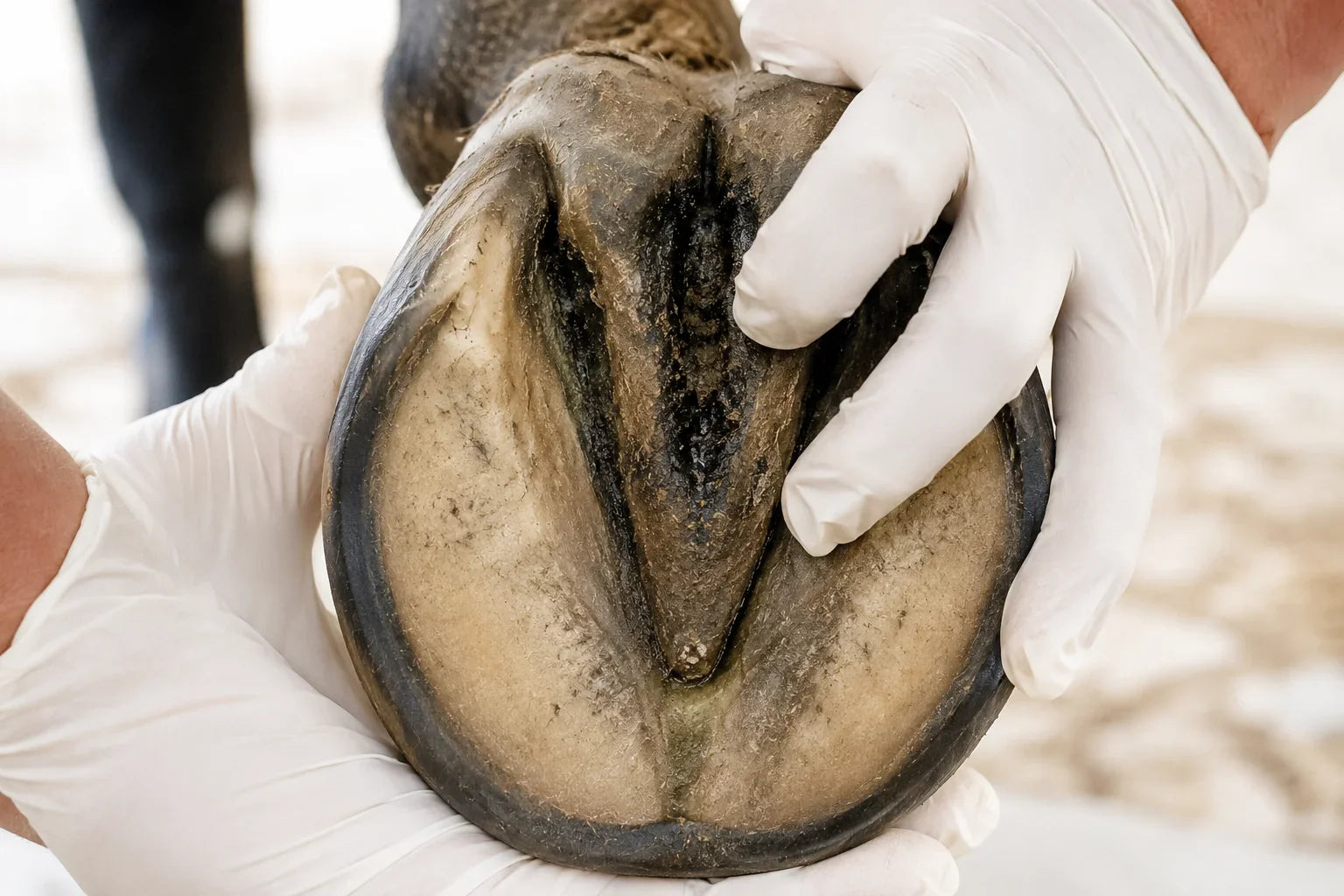
Brittle and fragile horse hooves
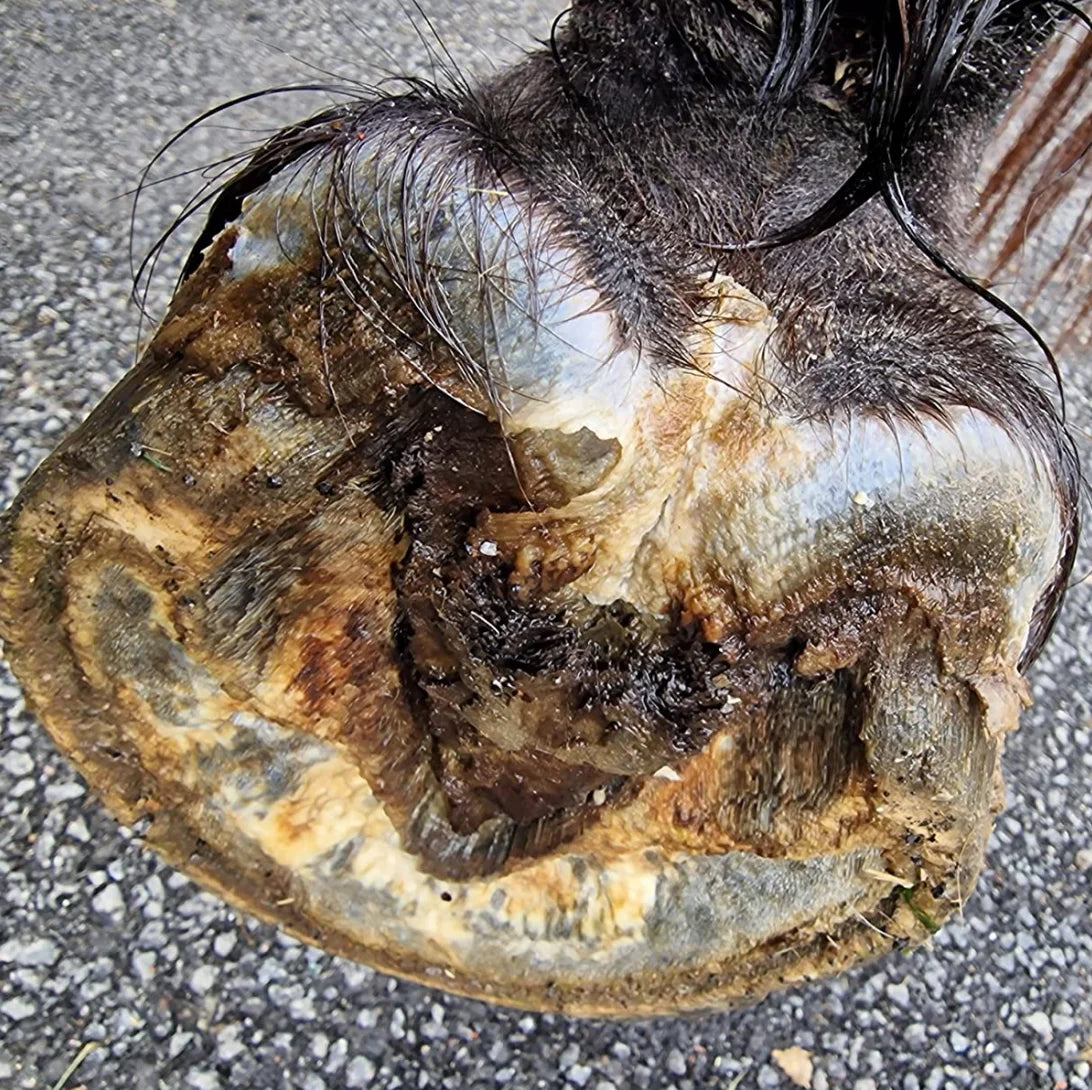
Radiating thrush