
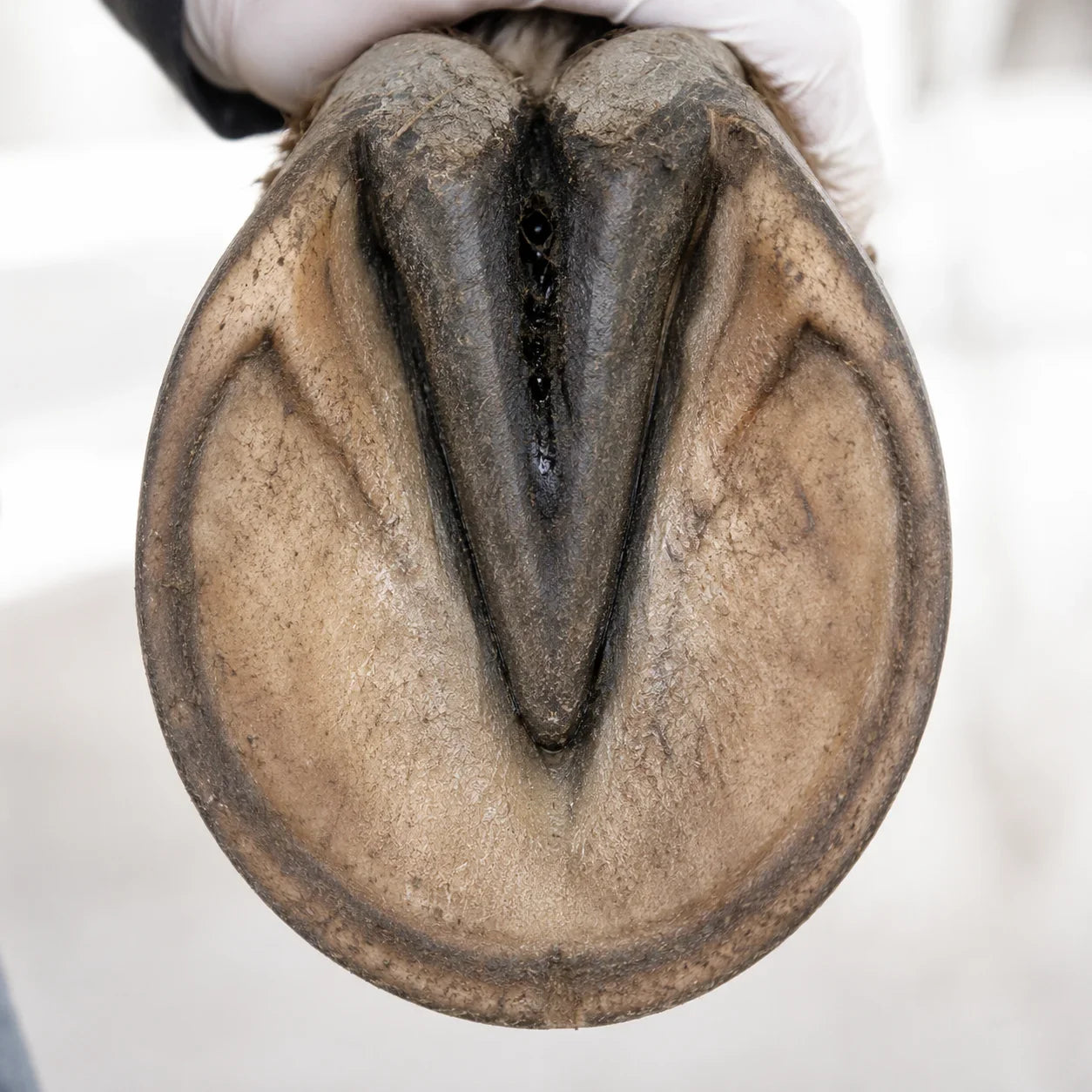
Detect it early, before deeper tissue is affected
Thrush often begins inconspicuously. At first glance, your horse's hoof may still look healthy, even though initial changes are already developing in a narrow or deep frog sulcus.
You may have noticed a slight unpleasant odor, horn that is becoming softer, or dark material in the central frog sulcus. These can be early indications. If you recognize these warning signs in time, you can adjust management, hoof care, and trimming or shoeing at an early stage.
In this guide, we show you what the early stage of thrush can look like, which areas you should inspect especially carefully, and when you should have a change assessed professionally.

Olaf's tip for early detection
In early thrush, it is often the small changes that provide the crucial clue. Therefore, do not wait until the frog smells strongly or is visibly deteriorated. Regularly compare the hoof with its normal condition, and take new deep sulci, soft horn, or recurring moisture seriously.
With this guide, Olaf and the Hoofgold team want to help you assess such warning signs more calmly and confidently. The personal photo and Olaf's detailed practical tip appear further below in the expert assessment section.
Early-stage thrush: quick check
Check the hoof for these early warning signs:
- A new, unpleasant odor when picking out the hoof
- Dark or slightly greasy material in a frog sulcus
- Frog horn becoming softer
- An unusually deep central frog sulcus
- Small loose horn flaps or pockets
- Recurring moisture deep between the bulbs
- Slight sensitivity when touched gently
Why is thrush often overlooked in its early stages?
Thrush does not always begin with a clearly black, destroyed frog. In many cases, the first change lies deep in a frog sulcus, while the visible surface still appears relatively unremarkable.
The central frog sulcus in particular can continue as a narrow cleft far between the bulbs of the heel. Moisture, dirt, and organic material can adhere there more easily. At the same time, this area is difficult to assess when looking normally at the underside of the hoof.
The smell may also initially be only faint. You may simply notice that the same area appears damp or dark again shortly after picking out the hoof.
In the early stages, your horse often still walks normally. The absence of lameness therefore does not automatically mean that the frog is completely healthy.
What does a healthy frog look like on a horse?
To recognize early changes, it first helps to know what a healthy frog typically looks and feels like in your horse.
A healthy frog is generally:
- firm but slightly elastic,
- not greasy or muddy,
- largely free of a strong, foul smell,
- clearly separated from the collateral frog sulci,
- without deep, dirty pockets and
- not sensitive to pain when touched gently.
Its shape can vary depending on the horse, hoof shape, management, and trimming. Not every healthy frog looks exactly the same. What matters is that you know your horse's normal condition, the horn feels stable, and there are no deepening, deep, or foul-smelling areas.

The first signs of thrush
In the early stages, individual warning signs can be very mild. Therefore, pay particular attention to changes from your horse's normal condition.
1. Unusual smell
A foul or pungent smell is one of the best-known signs. However, at the beginning it may be only faintly noticeable.
Clean the hoof and check it again the following day. If the unpleasant smell quickly returns, the affected sulcus should be examined more closely.
2. Dark material in the frog sulcus
Dark deposits may consist of soil, manure, and moisture. They become more suspicious when the material appears greasy, smells unpleasant, and keeps forming in the same place.
3. Softening frog horn
Healthy frog tissue is resilient. If the horn becomes noticeably soft, brittle, or easily crumbled in individual areas, this may indicate early damage.
4. A deepening central frog sulcus
A narrow, deep sulcus between the bulbs is often difficult to keep clean and dry. If it deepens or repeatedly contains dark material, it should be assessed by a professional.
5. Small loose flaps of horn
Some separation of old horn layers can be normal. Loose flaps of horn can become problematic if there are moist, dark, or smelly pockets beneath them.
6. Mild sensitivity
Some horses show mild sensitivity at an early stage when a specific sulcus is gently touched. Strong pain reactions, bleeding, or lameness, on the other hand, indicate a more advanced or otherwise concerning finding that should be assessed.

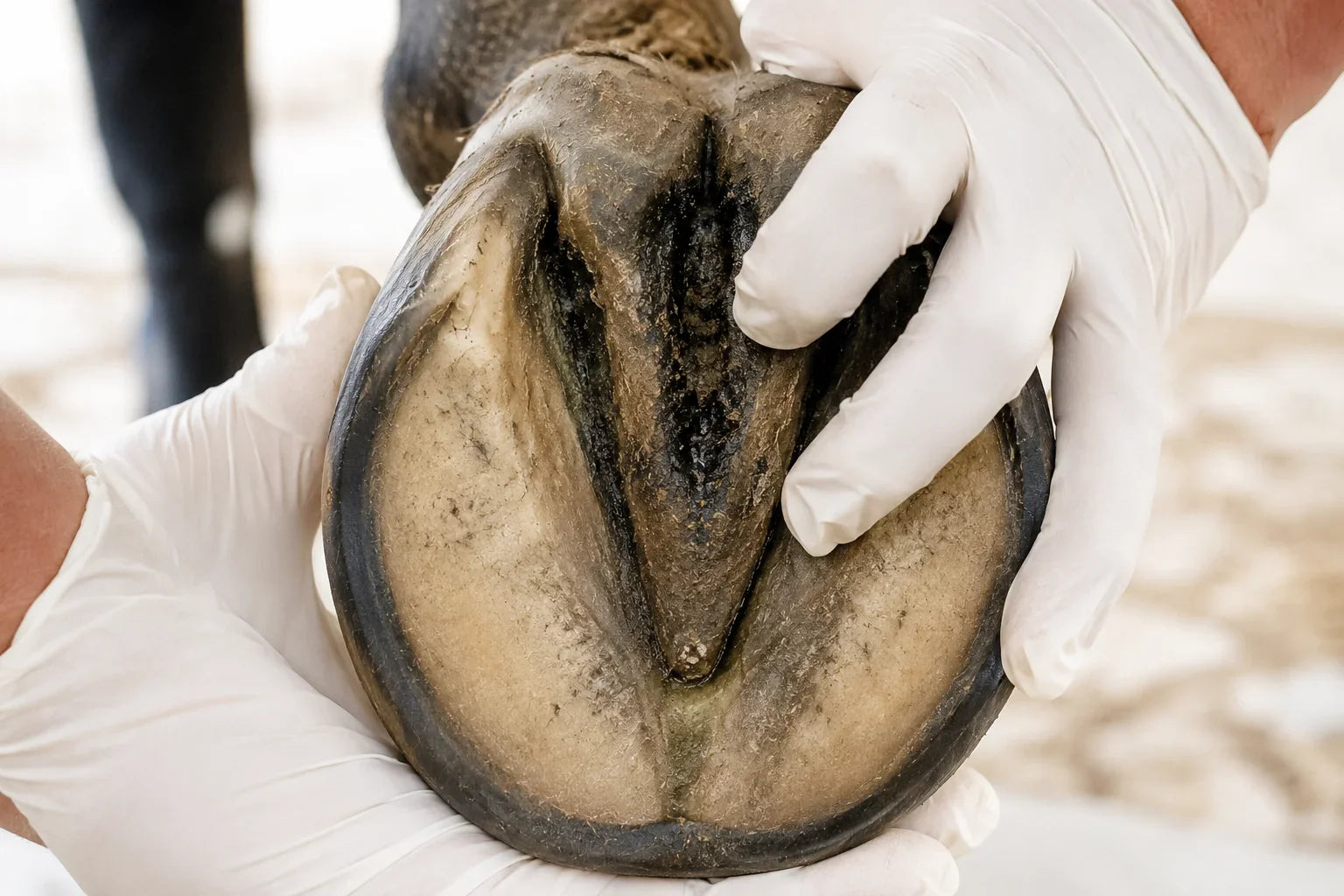
How to properly inspect the central frog sulcus
The central frog sulcus runs down the middle of the frog toward the bulbs. In some horses, it is shallow and well ventilated; in others, it is very narrow and deep.
A deep sulcus in particular can conceal early changes. Therefore, do not just look at the surface, and always proceed carefully during the inspection.
How to carry out the inspection
- Place the horse in a safe, well-lit area.
- Carefully remove coarse dirt with the hoof pick.
- Examine the sulcus in bright light.
- Check whether it is dry, moist, narrow, or deep.
- Pay attention to any smell and recurring dark deposits.
- Do not forcefully press or poke deep into the sulcus.
If the sulcus extends far between the bulbs as a narrow slit, a qualified hoof professional should assess whether hoof shape, heel placement, or trimming is contributing to the problem.

The frog is coming loose: normal horn renewal or thrush?
If horn tissue comes loose from your horse's frog, you do not need to immediately assume the worst. This does not automatically mean that thrush is present. Older or overgrown horn can come loose as part of the natural process of horn renewal.
Signs of normal horn wear
- The underlying horn appears firm and dry.
- There is no noticeably foul smell.
- The area is not sensitive.
- There is no deep, greasy pocket.
Signs of a problematic change
- There is dark or moist material beneath the loose horn.
- The area smells unpleasant.
- The horn crumbles easily.
- Pockets keep forming in the same spot.
- The horse is sensitive.
Healthy frog and early-stage thrush compared
| Characteristic | Healthy frog | Possible early stage |
|---|---|---|
| Smell | Inconspicuous | Slightly foul or unusual |
| Horn quality | Firm and elastic | Soft or brittle in places |
| Frog groove | Open and easy to check | Deep, narrow, or repeatedly moist |
| Deposits | Normal dirt can be removed | Dark material quickly forms again |
| Sensitivity | No noticeable reaction | Possibly a slight reaction |
| Gait | Inconspicuous | Usually inconspicuous in the early stage |

The 5-minute check routine for horse owners
With a brief regular check, you can identify changes early. It does not replace professional hoof care, but it makes developments visible more quickly and gives you greater peace of mind in everyday life.
Step 1: Remove coarse dirt
Carefully remove manure, dirt, and stones from the frog grooves and the sole.
Step 2: Check the smell
Pay attention to whether there is a new or noticeably unpleasant smell.
Step 3: Examine the horn
Check whether the frog feels firm or whether individual areas have become soft, slimy, or brittle.
Step 4: Check the groove depth
Pay particular attention to the central frog groove and the area between the bulbs of the heel.
Step 5: Document the progression
Photograph suspicious areas once a week in similar lighting and from the same perspective.
What should you do at the first signs of thrush?
If you notice early warning signs, do not wait until the horn is more severely damaged. At the same time, you should not immediately start using aggressive substances or trimming deeply. Proceed calmly and systematically.
- Clean the hoof carefully.
- Photograph the affected area.
- Document the smell, horn quality, and groove depth.
- Check the living conditions and ground moisture.
- Check the date of the next hoof-trimming appointment.
- Consult a hoof-care professional if the groove is deep or you are unsure.
- Start a suitable care routine based on the findings.
You can find the complete procedure in our guide Treating thrush: step-by-step guide .
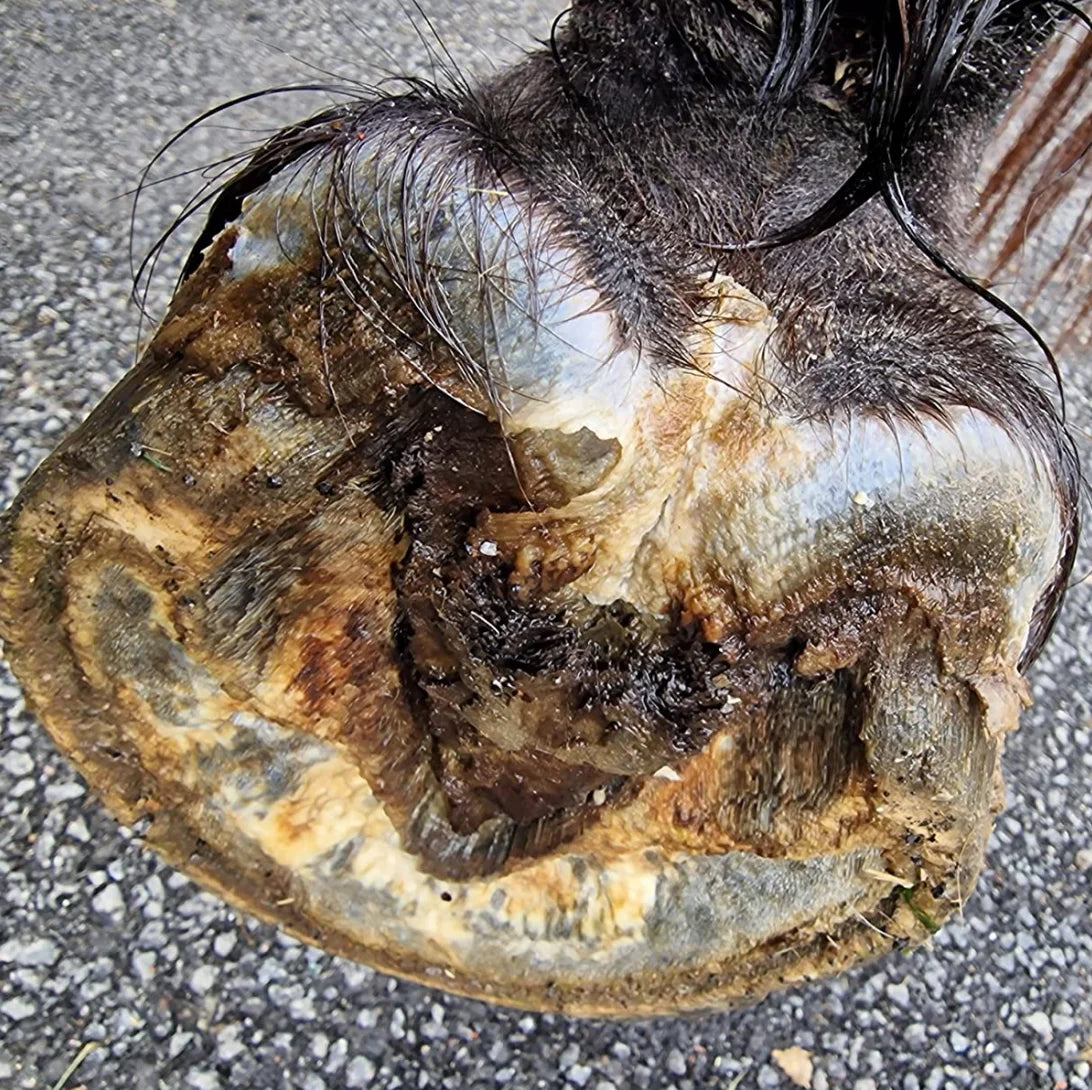
When is it more than an early stage?
The following signs indicate that the condition is advanced or at least requires professional assessment:
- Strong, foul odor
- Black, greasy, or severely deteriorating horn
- Very deep cleft between the bulbs of the heel
- Clear pain response
- Bleeding or visibly sensitive tissue
- Heat or swelling
- Changed gait or lameness
- No improvement despite consistent care
In these cases, you should have the diagnosis checked by a veterinarian, farrier, or qualified hoof-care professional. A deep or painful change must not be treated like a small, superficial area of horn. If you are unsure, it is better to seek help early.
You can find out more later in the guide Severe Thrush in Horses: Warning Signs and the Right Approach .
Hoofgold practical tip
Olaf's practical tip: In my daily hoof-care work, I often see that odor is not always the first or most important sign. A middle frog groove that is becoming increasingly deep may already be problematic before you notice large amounts of black material.
So don't just ask yourself: “Does the hoof already smell strongly?” It is just as important to ask: “Can this groove remain clean, dry, and ventilated at all?”
Always consider the visible horn changes together with hoof shape, hoof care, movement, and management. If you are unsure about the assessment, your hoof-care professional and the Hoofgold team will be happy to help.

Frequently asked questions about the early stages of thrush
What does thrush look like in its early stages?
It often appears as softening horn, dark deposits, a slight unpleasant odor, or an unusually deep frog groove. Significant visible damage may not yet be present in the early stages.
What is the very first sign of thrush?
This can vary from horse to horse. Often, the first signs are a changed odor, a persistently damp groove, or softer horn in a specific area.
Can thrush begin without an odor?
Yes. A deep or narrow frog groove, as well as softening horn, may already be noticeable before a strong odor develops.
Is black material always thrush?
No. Soil, manure, and moisture can also cause dark deposits. Black material is particularly suspicious when it is greasy, smells unpleasant, and keeps forming in the same groove.
Does a deep frog groove automatically mean thrush?
Not automatically. However, a very deep, narrow groove is a risk area because it is difficult to keep clean and dry. It should be checked regularly and professionally assessed if necessary.
Is loose frog horn normal?
Partly, yes. Old horn can naturally detach. However, if soft, moist, foul-smelling or sensitive tissue lies beneath it, the area should be examined more closely.
Does a horse become lame in the early stages?
Usually not. Lameness or a strong pain response may indicate that more sensitive tissue is affected or that another hoof problem is present.
How often should I check the hoof?
A suspicious area should be checked regularly, often daily. The exact care routine depends on the findings and the hoof-care professional's recommendations.
Can early thrush get worse quickly?
Yes, especially if the hoof remains permanently damp, dirty or difficult to access. Early monitoring and adjusting the conditions can prevent further deterioration.
Does early thrush need to be trimmed out immediately?
Not every minor change needs to be trimmed out. However, loose, undermined or pocket-forming areas of horn should be professionally assessed. Deep cutting on your own is not recommended.
When should I call the veterinarian?
A veterinarian should be consulted in cases of lameness, bleeding, heat, swelling, significant pain, deep lesions or an unclear diagnosis.
Do not ignore early changes
You do not have to assess early changes on your own. The sooner you notice unusual frog grooves, odor or soft horn, the sooner you can adjust hoof care, management and trimming.
At Hoofgold, we want to support you with clear practical knowledge and suitable care solutions - so you can monitor your horse's hooves attentively and know when professional help is advisable.
Discover Hoofgold frog care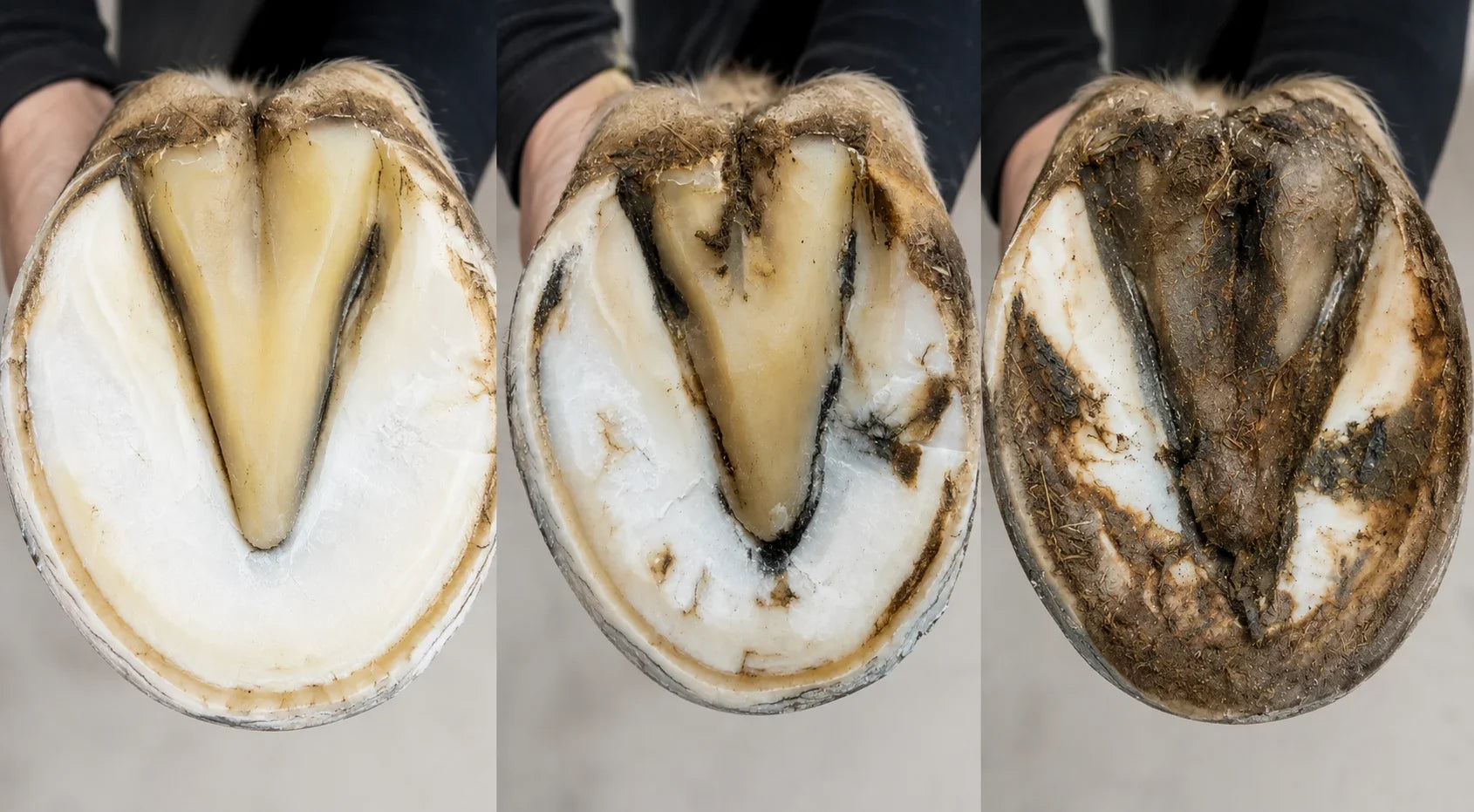
Share:
Thrush in horses: causes, symptoms, treatment, and prevention
Home remedies for thrush: What helps and what can cause harm?